For Healthcare Professionals in Medical Aesthetics
Grow Your Medical Aesthetics Career With Our Aesthetic Training
- To secure your place in the program, a deposit of $1000 is required. This deposit grants you access to the online courses and becomes non-refundable once the theoretical training has begun.
- The remaining balance will be due three weeks prior to the in-person practical component. Please contact us for more information.
For Healthcare Professionals in Medical Aesthetics
Grow Your Medical Aesthetics Career With Our Aesthetic Training
- To secure your place in the program, a deposit of $1000 is required. This deposit grants you access to the online courses and becomes non-refundable once the theoretical training has begun.
- The remaining balance will be due three weeks prior to the in-person practical component. Please contact us for more information.
Sonography Ultrasound Training Program In medical aesthetic
Facial Ultrasound for Injection Safety
Our ultrasound course offers an intensive, hands-on learning experience deliberately limited to small groups (minimum 3, maximum 6 participants) to ensure each healthcare professional receives personalized attention and ample practice time.
Upcoming Course Dates:
For more information, please contact us.
AMEQ - QUEBEC ACADEMY OF AESTHETIC MEDICINE
Dr. Guzzo Trains Healthcare Professionals in Medical Aesthetics
Our program is comprehensive and personalized. As well, you have the option to become CBAM certified, a certificate that is recognized in many countries.

Angelina Guzzo
BSc, PhD, MDCM, FRCPC
AMEQ - Basic Ultrasound course
Master Ultrasound Technology to Elevate Your Aesthetic Practice
In today's evolving field of medical aesthetics, the best injectors use ultrasound technology to enhance safety and precision. AMEQ Academy is proud to introduce our comprehensive Basic Ultrasound course
Facial Ultrasound for Injection Safety for Healthcare Professionals, specifically designed for practitioners looking to elevate their skills in aesthetic medicine through advanced imaging techniques.
Ultrasound provides a profound insight into facial anatomy, allowing practitioners to visualize important structures and precisely locate the optimal injection sites. By incorporating ultrasound guidance into your practice, you’ll dramatically improve patient safety while achieving superior aesthetic outcomes.
NEW!
Facial Ultrasound for Injection Safety
- Comprehensive Learning Materials
- Hands on practical sessions
- Lunch
Cost:
$2,500
per healthcare practitioner
Telephone:
For Training / For the Models:
(514) 574-4636
Email:
Address:
600 Sherbrooke st. East, suite 101. Montreal. QC H2L 1K1
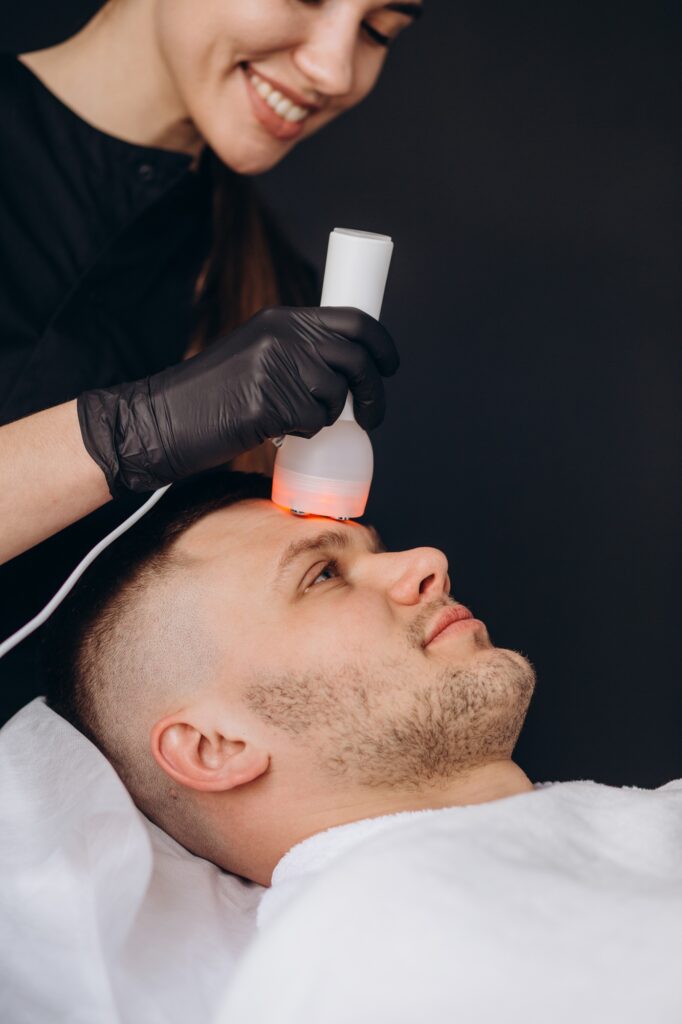
For Healthcare Professionals in Medical Aesthetics
Our Courses 2025
The objectives for the course:
- Learn how to handle an ultrasound to obtain images on the face.
- Image the jawline and find the masseter, parotid, facial artery and vein.
- Image the zygoma, recognize the 5 facial layers and appreciate the continuity of the SMAS.
- Image the temple and identify the 9 layers of the temple. Describe which layers are safe to inject in. Identify danger zones for injection.
- Image the chin and its muscles. Identify the safe injection zones by identifying ascending mental arteries.
- Image upper and lower lip and labial arteries.
- Image the nose and its vessels.
- Image the forehead and associated vessels with perforators.
- Understand how ultrasound can be used to prevent complications and to treat complications.
Course Outline:
9:00 - 10:00
Lecture Introduction to Ultrasound
10:00 - 10:45
Jawline – Masseters, Parotid and Vessels
10:45 - 11:15
Midface – Zygoma, Pyriform fossa – identify danger zones, Obicularis Oculi : tear trough versus SOOF
11:15 - 11:30
Break
11:30 - 12:15
Temple – The nine layers, where to inject and identify danger zones
12:15 - 13:00
Lunch
13:00 - 13:45
Chin and Lower Lip
13:45 - 14:15
Upper Lip
14:15 - 14:30
Break
14:30 - 15:00
Nose
15:00 - 15:30
Forehead
15:30 - 16:30
30 Introduction to treating complications using ultrasound
16:30 - 17:00
Quiz

Dr. Angelina Guzzo
BSc, PhD, MDCM, FRCPC
Dr. Guzzo has been a licensed specialist in anesthesia for the last 16 years and a cosmetic injector since 2014. She has received training at McGill University, MIT in Boston, Dalhousie University and the University of Toronto. As a Ph.D. and a professor at McGill, she loves teaching students and has brought this passion for teaching into her aesthetic practise and in her interactions with patients.
Dr. Eric Bilodeau
ENT Facial aesthetic surgeon
Dr. Éric Bilodeau is a skilled physician specializing in otolaryngology and cervicofacial surgery. A graduate of Université de Montréal’s Otorhinolaryngology program and the founder of the ENT oncology department at Cité de la Santé de Laval, Dr. Bilodeau has been practicing his specialty for 28 years. With a deep passion for rhinoplasty and facial cosmetic procedures, he has developed aesthetic medicine as his sub-specialty. His strong artistic sense, dedication to perfection, and creative approach distinguish him in his field.
Dr. Bilodeau is widely recognized as one of the best surgeons for rhinoplasty, having performed many successful surgeries with outstanding results. He also specializes in liquid rhinoplasty, offering non-surgical rhinoplasty using dermal fillers to modify and enhance the nose’s shape. His expertise in both surgical and non-surgical rhinoplasty makes him a trusted choice for patients seeking to improve their facial aesthetics.
Basic Ultrasound course
FAQ
Ultrasound guidance is crucial for aesthetic procedures because it allows practitioners to visualize facial anatomy in real-time, identifying vascular structures and precisely placing fillers. This significantly reduces complication risks, improves treatment outcomes, and represents the gold standard in injection safety.
Our ultrasound course is designed for licensed healthcare professionals including physicians, nurse practitioners, and registered nurses who have prior experience with or are currently training in aesthetic injections. All participants should have a foundation in medical aesthetics before attending.
Ultrasound technology enhances patient safety by allowing practitioners to visualize vascular structures before injection, confirm precise needle placement, identify previously placed fillers, and detect complications early. This visualization dramatically reduces risks associated with blind injections.
We maintain a very low instructor-to-student ratio by limiting each course to a maximum of 6 participants. This ensures each healthcare professional receives personalized instruction and ample hands-on practice time with the ultrasound equipment.
Yes, our course is specifically designed to provide the practical skills needed to implement ultrasound technology immediately in your practice. The hands-on training format ensures you’ll leave with confidence in your ability to use ultrasound for guided aesthetic procedures.
Comprehensive study materials are provided two weeks before the course, including detailed facial anatomy guides, ultrasound interpretation resources, complication management protocols, and technique guides. These materials allow you to prepare in advance to maximize your in-person learning.
While traditional aesthetic courses focus on external landmarks and technique, ultrasound training takes your skills to an advanced level by teaching you to visualize internal structures. This visualization allows for more precise, safer treatments and represents the future standard of care in aesthetic medicine.
Ultrasound guidance can help prevent serious complications including vascular occlusion, tissue necrosis, nerve damage, and improper product placement. By visualizing structures before and during injection, practitioners can avoid high-risk areas and confirm optimal product placement.
Yes, AMEQ Academy’s training programs are designed to meet or exceed the standards set by relevant Canadian medical regulatory bodies, including requirements for continuing education in specialized aesthetic procedures.
AMEQ Academy offers the Basic Ultrasound Course for Healthcare Professionals several times throughout the year, with upcoming sessions in May and June 2025. Due to the small-group format, courses fill quickly, and early registration is recommended.
Basic ultrasound techniques focus on fundamental anatomy visualization, vascular mapping, and guided injection principles. Advanced techniques, which may be covered in subsequent training, include complex complication management, layered filler visualization, and specialized regional approaches.
While the primary focus is on filler injections where ultrasound guidance provides the most significant safety benefits, the course does cover applications for neuromodulator injections, particularly in anatomically complex areas where precision is crucial.